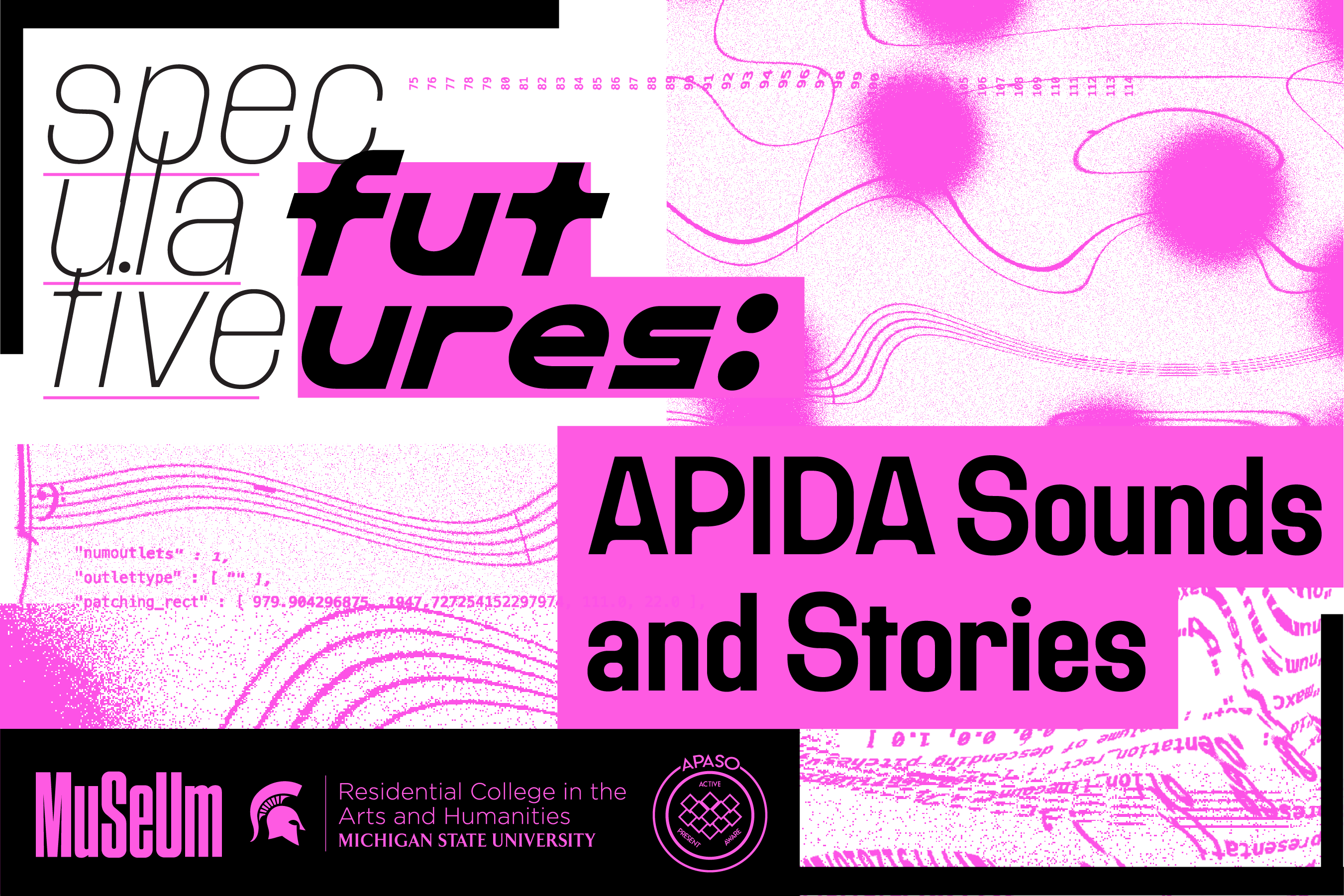
As the United States turns 250, the Speculative Futures series looks ahead, spotlighting artists, poets, scholars, and storytellers who imagine what comes next. Through programs celebrating Black History, Women’s History, AAPI Heritage, Hispanic Heritage, and Native American Heritage Months, the series asks how visionary narratives can reimagine identity, justice, and possibility in America’s next chapter.
Speculative Futures | APIDA Sounds and Stories
Panel Talk, Musical Performance, and Night Market
Join us for an evening of music and conversation exploring imagination, identity, and the possibilities of tomorrow. Featuring a live performance by musician Austin Har and a panel discussion with MSU faculty and students from APASO (Asian Pacific American Student Organization), this Speculative Futures program examines how creative expression can shape more inclusive futures.
Following the panel, the program expands into a vibrant “Night Market” experience across the Museum. Visitors are invited to explore a network of student organizations and community groups throughout the building, collecting stamps at each stop to be entered for giveaway prizes. This interactive, museum-wide activation transforms the evening into a dynamic collaboratory. This event brings together ideas, cultures, and creative practices through exploration, exchange, and shared experience.
Panelist Include:
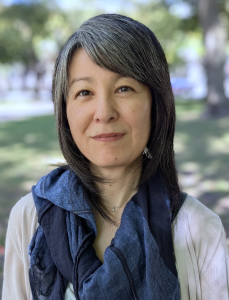
Naoko Wake is Professor of History and former Director of the Asian Pacific American Studies Program at Michigan State University. She has authored Private Practices: Harry Stack Sullivan, the Science of Homosexuality, and American Liberalism (Rutgers, 2011) and American Survivors: Trans-Pacific Memories of Hiroshima and Nagasaki (Cambridge, 2021). She has created the largest oral history collection of Asian American survivors of the 1945 atomic bombings in the world, housed in MSU’s Robert G. Vincent Voice Library and in the Densho Digital Repository in Seattle. Her current project concerns the histories of disability, archives, and literature in Asian America/Pacific Islands. In Michigan, she has served as an expert witness for the Korematsu Day Bill for House and Senate Committees, helping Michigan become the 7th state in the union to observe Korematsu Day in perpetuity and allowing Michiganders to commemorate the civil rights activist who resisted the Japanese American internment during WWII.
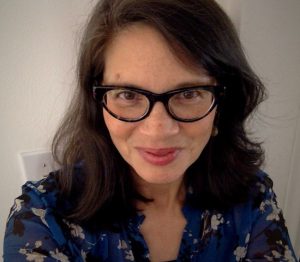
Terese Guinsatao Monberg (she/her) is Associate Professor of Rhetoric and Writing, Associate Dean, and founding faculty member of the Residential College in the Arts and Humanities (RCAH) at Michigan State University. She served as Director of MSU’s APA Studies Program from 2017-2019. As a community-engaged scholar and teacher, her work focuses on methods for mobilizing Asian/American and Filipinx/American rhetoric, community literacies, and countermemory. Much of her work is co-authored, co-edited, and has intentionally been placed in outlets that value collaborative forms of knowledge making. Dr. Monberg currently serves as co-editor of the Filipino American National Historical Society (FANHS) Journal, which publishes research by both academic and community scholars.
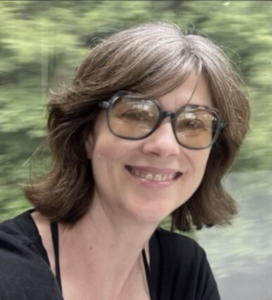
Anna Pegler-Gordon teaches in the Asian Pacific American Studies program and the James Madison College at Michigan State University. Her research and teaching interests include Asian American history, immigration and citizenship policy. She is the author of award-winning books, In Sight of America: Photography and the Development of U.S. Immigration Policy (2009) and Closing the Golden Door: Asian Migration and the Hidden History of Exclusion at Ellis Island (2021). Her current research is focused on everyday Japanese American resistance during World War II.
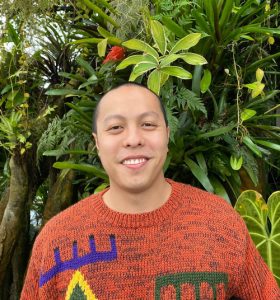
Austin Oting Har is a composer, writer, and performer whose work bridges ancient philosophy, music technology, and experimental sound. Drawing on ancient languages, instruments, digital sound design, and creative coding, his practice spans contemporary classical, electronic, popular music, and poetry, with a focus on phonaesthetics—the sound of words as meaning. His collaborations connect Greek tragedy, Japanese nō theatre, and renga poetry with contemporary music across Australia, Europe, Japan, and the United States. In fall 2025, he joined Michigan State University as Assistant Professor in the Residential College in the Arts and Humanities, where he co-founded Bogue Street Records, an experimental RCAH record label.
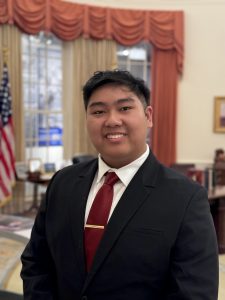
Born in Grand Rapids, Michigan, Tony Pham is a proud West Michigander and sophomore majoring in Interdisciplinary Studies in Social Science at Michigan State University. He currently serves as the Cores and Cams Liaison and as Vice President for Academic Affairs in ASMSU, advocating for student academic initiatives and uplifting minority voices across campus.
Tony previously collaborated with the National Archives, West Michigan Asian Community, and the Gerald R. Ford Presidential Museum on an APIDA-focused project commemorating 50 years since the Fall of Saigon and the stories of immigrants who came to Grand Rapids. He also works in the Michigan State Legislature under Representative Glanville and works on Congresswoman Scholten’s campaign—both proud West Siders.
Student Groups Participating in the Night Market
APASO: Asian Pacific American Student Organization
WE ARE SAATH: Bringing Mental health awareness to South Asian Communities
Spartan Sur: South Asian Co-Ed acapella group
PASS: Pilipino American Student Society
KSA: Korean Student Association
CTRL + A: Student org that celebrates APIDA culture and diversity through dance
VSA: Vietnamese Student Association
JSA: Japanese Student Association
HASA: Hmong American Student Association
Spartan Diabolo: Shares the art of Chinese yo-yo