Creating Access with Tech
What is the “Creating Access with Tech” Project?
This project focuses on enriching the museum experience for visitors who are blind or have low vision by providing audio description (AD) and wayfinding by using Radio-Frequency Identification (RFID) technology. RFID uses tiny tags scanned by a reader to deliver information to a user through a website, software, or app. At the MSU Museum, visitors can have information triggered by an RFID tag delivered to their device using the “Access Audio” app when they approach a hidden antenna in the Habitat Hall gallery. This will increase accessibility for visitors.
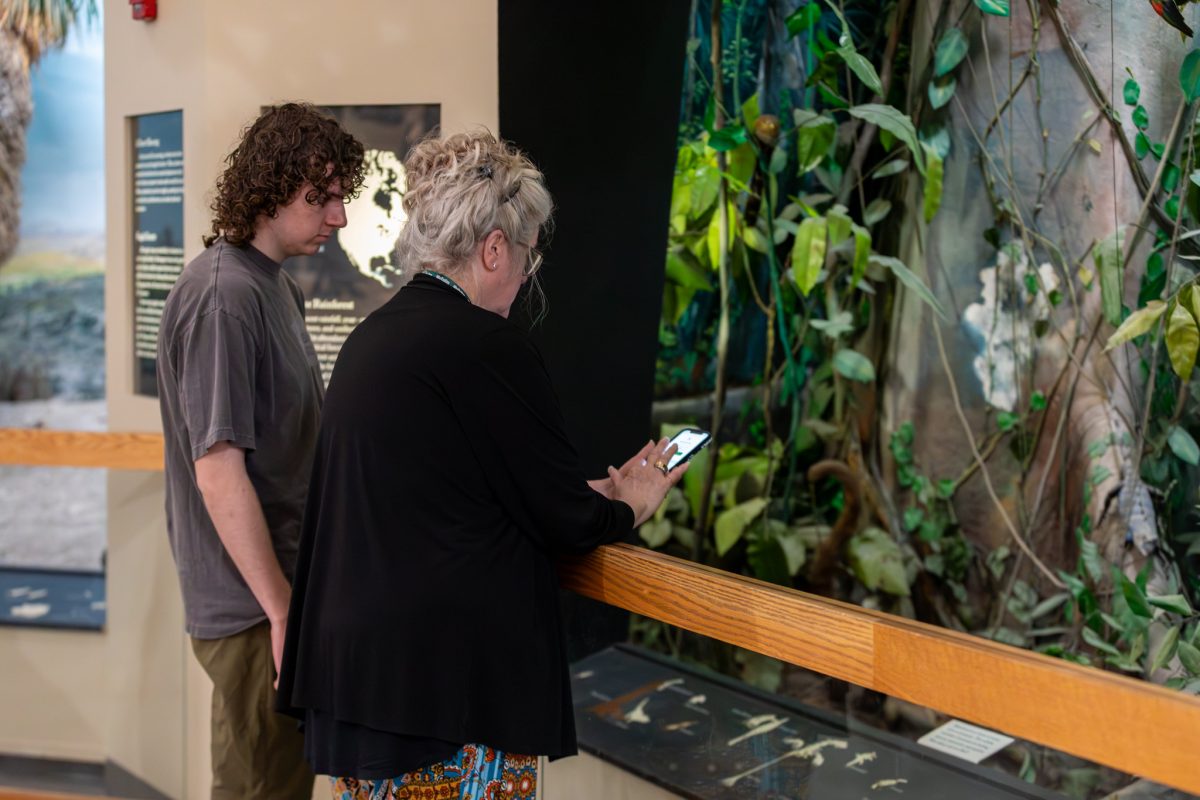
The American Council of the Blind describes audio description as “live or as a voiceover narrative—makes visual imagery accessible to people who are blind or visually impaired.” AD can enhance museum visits and create equity by allowing people who otherwise would not be able to see exhibition content to have it delivered to them in an alternate format. Besides accessibility reasons, AD can make museum experiences richer for all visitors through the benefits of universal design, Earley et al. have noted.
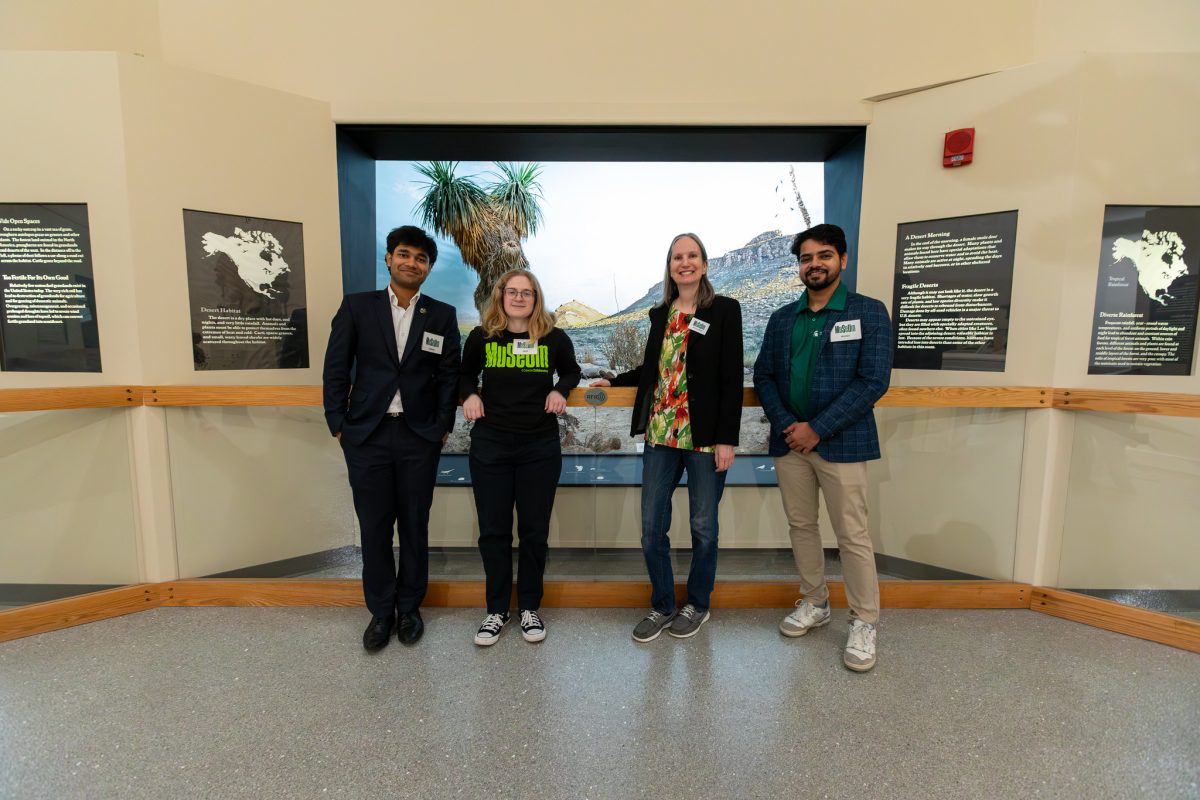
The development and testing work involved a dedicated team of MSU Museum staff members, project advisory group members, vendors, and user testers from the local community. We are grateful for all the support that was provided throughout the project. We hope that other museums and institutions will be able to learn from our experiences. For more information, contact the MSU Museum Education Team at museumed@msu.edu or 517-432-1472.
Focus: Professional Development Work
One of the main parts of the project involved training MSU Museum staff members (including regular staff, student staff, and volunteers) to create, produce, test, and update our own audio descriptions and to learn how to best employ these descriptive files through appropriate technology in our galleries is the solution. The professional development included:
- Learning to assess our museum spaces to understand physical visitor navigation paths and potential obstacles for visitors with visual impairments,
- Learning to develop high-quality audio descriptions for RFID de livery and other interpretative and educational applications. and
- Planning how to use different types of RFID readers, apps, and other technologies in gallery spaces, to increase the quality of the visitor experience.
Project Resources
You can access resources developed during the “Creating Access with Tech” project below:
This project is funded by IMLS (ME-255798-OMS-24).
The views, findings, conclusions or recommendations expressed in this website do not necessarily represent those of the Institute of Museum and Library Services.