Every specimen has a story to tell. Opening October 27 at the Michigan State University Museum, Specimens and Stories explores how preserved animals reveal new insights into biodiversity, environmental change, and scientific discovery. From documenting Michigan’s changing landscapes to revealing the biodiversity of distant ecosystems, the exhibition invites visitors to discover how natural science collections help us better understand our planet’s past, present, and future.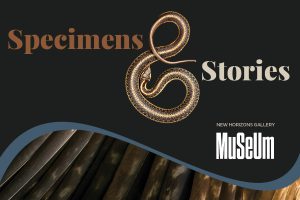
Specimens and Stories, a new exhibition at the MSU Museum, invites visitors to discover the fascinating histories and scientific discoveries preserved within natural science collections. On view in the Museum’s New Horizons Gallery, the exhibition highlights how specimens collected decades or even centuries ago continue to advance scientific research and deepen our understanding of the natural world.
Drawn from the MSU Museum’s vertebrate collections, Specimens and Stories brings together specimens spanning centuries, continents, ecosystems, and preservation methods. Each offers a window into the changing relationship between people and the environment, revealing how natural science collections document biodiversity, environmental change, and the history of scientific exploration.
“Visitors often see a preserved animal and think of it as something from the past, but every specimen represents a much larger story,” said Teresa Goforth, Director of Exhibitions at the MSU Museum. “With Specimens and Stories, we want to bring those stories to life and help visitors discover the people, places, and scientific questions connected to these collections. It’s an opportunity to see familiar museum objects in an entirely new way.”
While natural science collections are sometimes perceived as static archives, they remain essential resources for contemporary science. Specimens collected generations ago can provide information about ecosystems before urbanization, document changes in species distribution, and preserve biological material that researchers can investigate using technologies that did not exist when the specimens were originally collected.
The exhibition also highlights the enduring value of collecting, documenting, and preserving specimens for future generations of researchers.
“Natural science collections are essentially libraries of biodiversity, preserving scientific information that becomes increasingly valuable over time,” said Chan Kin Onn, Curator of Vertebrate Collections and Assistant Professor at the Department of Integrative Biology. “A specimen collected a hundred years ago can help us answer questions that scientists at the time could never have imagined. These collections allow us to study how species and environments have changed, and they provide critical information for understanding the biodiversity challenges we face today.”
Beyond their scientific significance, some specimens reveal compelling human stories of curiosity, exploration, and discovery. Together, they illustrate how museum collections connect generations of researchers and offer new opportunities for teaching and learning.
By making these collections accessible to visitors, Specimens and Stories underscores the MSU Museum’s role in connecting scientific research with public engagement and demonstrates why preserving natural science collections remains essential to understanding our changing world.